

Global Broker Regulation Inquiry App
WikiFX
English
简体中文
繁體中文
English
Pусский
日本語
ภาษาไทย
Tiếng Việt
Bahasa Indonesia
Español
हिन्दी
Filippiiniläinen
Français
Deutsch
Português
Türkçe
한국어
العربية
Things you need to know about Negative Commodity Prices – Causes and Effects
Abstract:It is a challenge for most market participants to wrap their heads around negative values for assets. In Europe and Japan, short-term interest rates in negative territory have become the norm. Banks charge depositors for storing their cash balances.
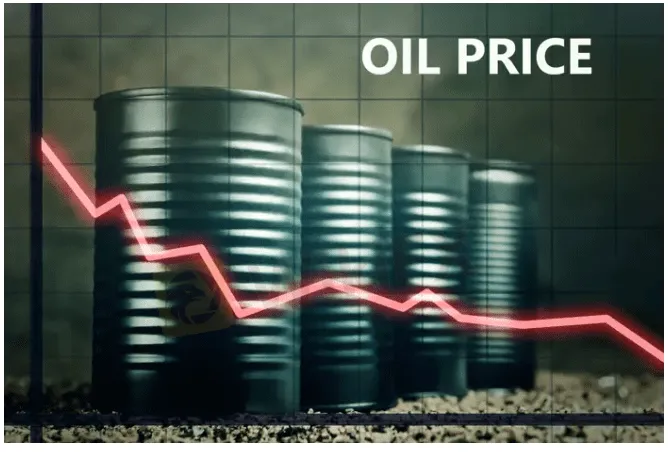
In commodity markets, we have seen markets move to levels where those holding long positions wind up paying other market participants to close positions. This can occur in the futures as well as the physical markets. The payment is not just market differences between the purchase and sale price. There have been instances where a purchase at zero turned into a losing proposition.
In the 1950s, the US regulators closed the onion futures market on the Chicago Mercantile Exchange as the price of the root vegetable fell into negative territory. At the time, trading in onions accounted for around 20% of the volume on the exchange. Market manipulation caused the price volatility in onions that have not traded in the futures market since 1958.
A raw material market can fall below zero
Negative commodity prices are nothing new, as other raw materials have declined to levels where sellers pay buyers to take a commodity off their hands. While some markets have seen zero or negative prices, others never experienced the phenomenon.
Aside from onions, another futures market has traded at or below a zero price. The power or electricity market is a use-it or lose-it market. The electric power runs along transmission lines, and if not consumed by a party that holds a long position, it becomes worthless or can even trade at a negative price.
April 20, 2020, was a day to remember in the crude oil market
Before April 20, 2020, the all-time modern-day low for the price of NYMEX crude oil was $9.75 per barrel, the 1986 bottom. In late April 2020, the price fell through that low and reached zero.

The quarterly chart highlights the decline to a low that few traders, investors, and analysts thought possible.
Some market participants likely purchased nearby futures at or near zero, assuming that they were buying at a price that was the sale of the century. They turned out to be tragically wrong. Crude oil fell to a low of negative $40.32 per barrel on April 20. The problem in the oil market was that there was nowhere to put the oil as storage facilities were overflowing with the energy commodity.
Historically, oil traders with access to capital purchased nearby futures and sold deferred contracts at times when contango, or the future premium, was at high levels. The theory behind owning the nearby contract and selling the deferred contract is that those who can store and finance the energy commodity gain a risk-free profit.
Holders of the spread hedge the price risk with the sale of the deferred contract and own the physical in case the market tightens, which is a call option on the spread. Meanwhile, speculators often synthesize the cash and carry trade using nearby and deferred futures without the ability to store the energy commodity. When nearby futures dropped to over negative $40 per barrel, the unexpected losses for those holding synthetic positions were staggering.
Storage capacity is the critical factor
Supply capacity is the crucial factor for any market participant holding a long position in a nearby futurescontract. Without the ability to take delivery and store the commodity, there is a potential for negative price levels. Assuming that the downside is limited to zero is wrong. Another market that could face a similar fate in the future is natural gas, where storage capacity is finite, and the price could venture into negative territory at some point.
Without the ability to store and finance a commodity, the downside risk is theoretically as unlimited as the upside.
Negative commodity prices may seem irrational, and it is always tempting to buy something for zero. In the world of commodities futures and some of the physical markets, zero could turn out to be a high price as the oil market taught us on April 20, 2020.

Disclaimer:
The views in this article only represent the author's personal views, and do not constitute investment advice on this platform. This platform does not guarantee the accuracy, completeness and timeliness of the information in the article, and will not be liable for any loss caused by the use of or reliance on the information in the article.
Long
Short
Slippage
Indicator
Leverage
Quoted currency
BOE
PBOC
Volume
Liquidity
Margin
RokingLTD
knowledge
Learn basic forex
Forex trading
Forex margin
Forex Chart
Forex indicator
support and resistance
Forex strategy
Forex Broker
Forex Currency pair
Forex Analysis
Forex news
leverage in forex
forex pips
Basic forex knowledge
forex market
forex beginners
FSCA
monetary policy
mortgage-backed securities
interest rates
inflationary
Non-farm payrolls
Ramadan
Read more
CMC Markets Australia Revenue Surges 34%, But High-Net-Worth Clients Face Tax Phishing Threat
CMC Markets Australia reports a 34% revenue surge. Simultaneously, the company's high-net-worth clients are facing a serious tax-related phishing threat.
Original 1h
E TRADE Review: Traders Report Tax on Withdrawals, Poor Customer Service & Fund Scams
Has your E Trade forex trading account been charged a withholding tax fee? Did your account get blocked because of multiple deposits? Did you have to constantly call the officials to unblock your account? Failed to open a premium savings account despite submitting multiple documents? Is fund transfer too much of a hassle at E Trade? Did you find the E Trade customer support service not helpful? In this E Trade review article, we have shared certain complaints. Take a look!
Original 5h

mBank Exposed: Top Reasons Why Customers are Giving Thumbs Down to This Bank
Do you find mBank services too slow or unresponsive? Do you find your account getting blocked? Failing to access your account online due to several systemic glitches? Can’t perform the transactions on the mBank app? Do you also witness inappropriate stop-level trade execution by the financial services provider? You are not alone! Frustrated by these unfortunate circumstances, many of its clients have shared negative mBank reviews online. In this article, we have shared some of the reviews. Read on!
Original 6h

In-Depth Uniglobe Markets Commission Fees and Spreads Analysis – What Traders Should Really Know
For experienced traders, the cost of execution is a critical factor in broker selection. Low spreads, fair commissions, and transparent pricing can be the difference between a profitable and a losing strategy over the long term. This has led many to scrutinize the offerings of brokers like Uniglobe Markets, which presents a tiered account structure promising competitive conditions. However, a professional evaluation demands more than a surface-level look at marketing claims. It requires a deep, data-driven analysis of the real trading costs, set against the backdrop of the broker's operational integrity and safety. This comprehensive Uniglobe Markets commission fees and spreads analysis will deconstruct the broker's pricing model, examining its account types, typical spreads, commission policies, and potential ancillary costs. Using data primarily sourced from the global broker inquiry platform WikiFX, we will provide a clear-eyed view of the Uniglobe Markets spreads commissions prici
Original 7h
WikiFX Broker
Latest News
WikiFX's New Evaluation of ATM Capital LTD: Does its License Protect the Arab Investor?
 WikiFX
How a Fake Moomoo Ad Led to the “New Dream Voyage 5” Scam
WikiFXIs Axi Legit? A Data-Driven Analysis of Its Regulatory Standing and Trader Feedback
WikiFXTrive Investigation: High Score, Hidden Risk - The Profit Paradox
WikiFXIn-Depth Uniglobe Markets Commission Fees and Spreads Analysis – What Traders Should Really Know
WikiFXFXPesa Review: Are Traders Facing High Slippage, Fund Losses & Withdrawal Denials?
WikiFXCMC Markets Australia Revenue Surges 34%, But High-Net-Worth Clients Face Tax Phishing Threat
WikiFXBessent believes there won't be a recession in 2026 but says some sectors are challenged
WikiFXYoung Singaporean Trader Grew USD 52 into a USD 107,700 Portfolio
WikiFXIs GGCC Legit? A Data-Driven Analysis for Experienced Traders
WikiFXCurrency Calculator
USD

CNY
Current Rate: 0
Amount
USD
Available
CNY
Calculate